
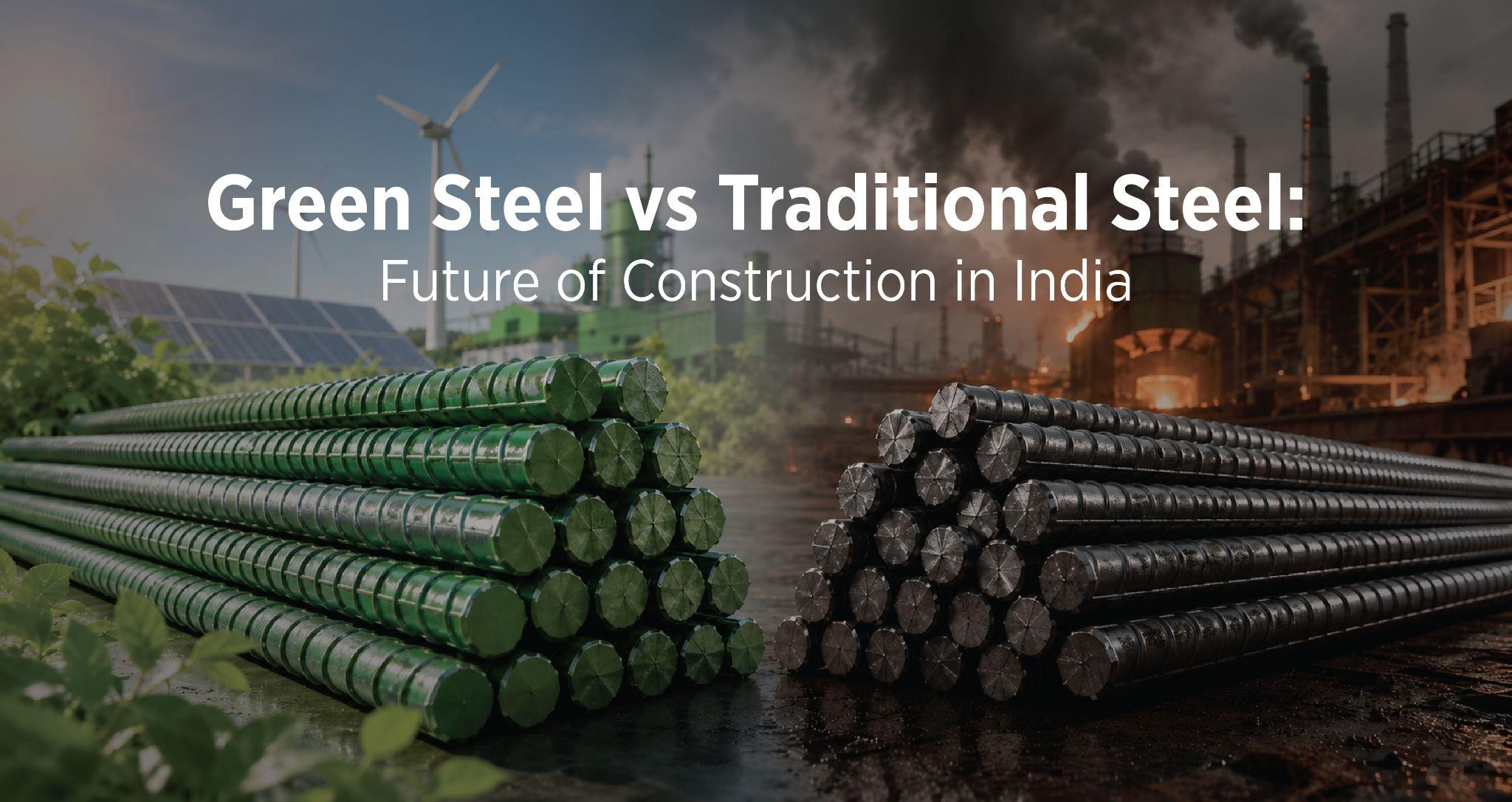
Green Steel vs Traditional Steel: Future of Construction in India
Talk to any builder today, and the chat isn’t just about cement rates. It’s about carbon. Clients want green buildings. Government tenders ask for EPD reports. Even home buyers check if the project is eco-friendly. Steel is a big part of that story because every RCC frame uses a ton of it. So what’s actually different between the old way and green steel? And does it matter for your next site?
Traditional Steel: How We’ve Built So Far
Most Steel Reinforcement Bars you see on sites still come from the blast furnace route. You take iron ore, add coking coal, heat it crazy hot, and out comes steel. It works. It’s strong. It built every flyover and apartment you see. The Best TMT Bars in India have used this method for decades.
The problem is the smoke. Making one ton of steel this way pumps out close to 2 tons of CO₂. That adds up fast. Construction already drives a huge slice of global emissions, and steel is a major piece of that. The bar in your column is solid, but the process behind it is dirty.
Green Steel: Same Strength, Cleaner Process
Green steel flips the method. Low-Carbon Steel Manufacturing replaces coal with cleaner alternatives. Some plants run electric arc furnaces that melt scrap with renewable power. Others use hydrogen instead of carbon to strip oxygen from ore. A few add carbon capture on top.
What you get at the end is still a Fe 550D TMT bar. Same yield strength. Same ductility. Same bond with concrete. Your engineer won’t change a single number in the design. The difference is what didn’t go into the air while making it. That’s the real benefit of Green Steel. You build the same safe structure, but your project’s carbon bill drops hard.
Green Steel vs Traditional Steel: Head-to-Head
Emissions: Traditional steel is heavy on CO₂. Green steel can cut that by 50% to 90%, depending on the tech. For projects chasing LEED or IGBC points, that’s a big win.
- Raw Material & Energy: The old method burns coal and mines fresh ore. Low-Carbon Steel Manufacturing leans on scrap recycling, hydrogen, or clean electricity. Less mining, less smoke.
- Price Right Now: Green steel costs more today. The tech is new, and hydrogen isn’t cheap yet. Traditional bars win on price per kg. But the gap is closing every year as scale grows.
- Quality: Zero change. A green Fe 550D bar meets IS 1786 just like a traditional one. No redesign needed. Masons won’t even know the difference on site.
- Future Rules: More tenders will ask for carbon data soon. Banks and investors want ESG-compliant projects. Sustainable Construction India is moving from “nice to have” to “must have.”
Why India Needs to Care Now
We’ve got a 2070 net-zero target. Our cities are heating up. Monsoons are wilder. Clients and regulators both want buildings that don’t trash the planet. Steel is one of the easiest places to cut emissions without touching safety.
Sustainable Construction India is picking up in Mumbai, Pune, Hyderabad, and even in tier-2 towns. Developers use it to get faster approvals and better branding. A home buyer might not ask about steel grade, but they will notice if your project is IGBC certified. Green steel helps you get there. The Benefits of Green Steel show up in compliance, funding, and market value, not just in the air.
And it’s not only for big commercial jobs. Group housing, schools, and hospitals all add up. If the steel in every column switches to a low-carbon route, the impact is huge.
Conclusion
Traditional steel built this country. But we can’t keep burning coal at the same pace. Green steel keeps the strength and safety we need while dropping the emissions we don’t. Yes, it costs a bit more today. In a few years, it won’t. Projects that start using it now will be ahead when rules tighten.
Think long term. Think Sustainable Construction India. Material choice is part of your project’s story now. Companies investing in Low-Carbon Steel Manufacturing are shaping what comes next. Radha TMT is pushing toward cleaner production while keeping the quality and ductility that builders trust. Their move to greener methods means you don’t have to choose between strength and responsibility. You get both. That’s where construction is headed.
FAQs
What are the main Benefits of Green Steel in construction?
The key Benefits of Green Steel are lower carbon emissions and easier green certification. The bar itself has the same strength, ductility, and bonding as regular TMT. So your structure stays safe while your project meets Sustainable Construction India goals and future compliance needs.
Will green steel affect my building design or strength?
No. Low-Carbon Steel Manufacturing changes how steel is made, not how it performs. A green Fe 550D bar meets IS 1786 standards just like traditional steel. You use the same sizes, spacing, and lap lengths. No redesign needed.
Why is Sustainable Construction India important for steel selection?
Steel makes up a large share of a building’s embodied carbon. To meet climate targets and green building codes, we need cleaner materials. Sustainable Construction India depends on supply chains that cut emissions. Using green steel helps projects earn IGBC/GRIHA points and appeal to eco-aware buyers.
Which brands offer low-carbon or green TMT bars in India?
Many steelmakers are shifting to Low-Carbon Steel Manufacturing. Radha TMT is among the Best TMT Bars in India, working on greener production without dropping quality. They focus on making TMT bars that meet BIS norms, support Sustainable Construction India, and still give the strength and ductility contractors need on site.