

Understanding High-Quality Steel: Types and Applications
Steel is a versatile alloy of iron (Fe) and carbon (C) used significantly across various industries. Composed primarily of iron with varied amounts of carbon and elements like manganese, chromium, and nickel, it is one of the most important engineering materials today. The high-quality steel boasts exceptional strength, durability, and versatility, making it the perfect component in countless manufacturing capacities.
Types of High-Quality Steel
Carbon Steel:
Mild Steel: A ferrous metal, mild steel is made of carbon content between 0.16% and 0.29%. It has a high melting point, making it more ductile after heat. This makes the mild steel suitable for drilling, welding, and forging and easy to fabricate. It is also exceptionally formable and recyclable. Mostly low-priced steel material, mild steel is used in most engineering applications.
High-Strength Low-Alloy (HSLA) Steel: Also termed as micro-alloyed steel, the HSLA steel has high-yielding strength. It is a mix of carbon along with other alloying elements. To retain the properties of formability and weldability, the HSLA steel has 0.05 and 0.25% of carbon, according to the book, “Alloying: Understanding the Basics.” In alloy steel, the mechanical properties and resistance to corrosion are much higher than the average carbon steel. Its use cases include structural applications, bridges, and roller coasters, which need sufficient strength-to-weight ratio. Unlike conventional alloy steel, the HSLA kind is designed to cater to specific needs.
Suggested Blog: Iron Rate Today Price
Stainless Steel:
Austenitic Stainless Steel: This quality of steel is non-magnetic stainless steel with higher levels of chromium and nickel. A few major characteristics of austenitic stainless steel are high temperatures’ corrosion resistance, formability, and strength. This type of stainless steel is perfect for home, industrial, transport, and architectural projects.
Martensitic Stainless Steel: A type of stainless steel, martensitic stainless steel is a bit similar to low alloy or carbon steel. Built around the composition of iron, they are known for their mechanical properties. Depending on the composition of the content of other elements, martensitic stainless steel is used in applications such as pumps, valves, and shafts, along with medical equipment like surgical blades, plastic injection molds, and nozzles.
Ferritic Stainless Steel: According to a Britannica report, the Ferritic Stainless Steel grade of stainless steel contains over 27 percent chromium and less than 0.20% carbon content. According to a report in nickelinstitute.org, Ferritic Stainless Steel is mainly used in building “tanks, chutes and structures in many water and alkaline environments.” Due to its lower carbon content, ferritic stainless steel has remarkable formability properties.
These can be easily bent and formed into numerous shapes without worrying about cracking or breaking. The Ferritic stainless steel falls under the straight chromium non-hardenable class of stainless alloys. It is differentiated from martensitic stainless steel with its no nickel element. Due to high thermal conductivity, ferritic stainless steel is widely used in furnaces and boiler heat exchangers too. These steels also have high oxidation resistance.
Tool Steel:
Tool steel is a special type of alloy used to design tools for molding, cutting, and other tooling components. They are tailored to retain the hardness, abrasion resistance, and heat resistance. It is most apt for applications in need of strength and durability.
Alloy Steel:
This alloy form of steel contains about different amounts of alloying elements in its composition, according to a report on Britannica. These elements are of multiple types, ranging from chromium, nickel and tungsten, manganese, and many others. On adding these elements to the steel, alloy steel has better machinability and higher corrosion resistance.
TMT Bars:

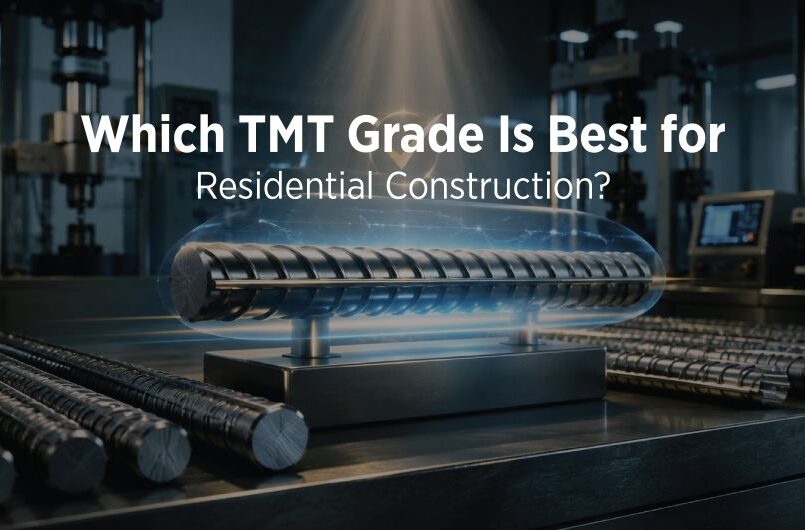
TMT bars also stand for “Thermo-Mechanically Treated” bars, basically under the carbon steel/high strength low alloy steels category. They are manufactured and designed to enhance a structure’s strength and durability. They are ideal for constructing big projects like skyscrapers, bridges, and other complex structures. TMT bars also have the robustness of bearing higher loads.
Further, these TMT bars are manufactured through a specialized process involving rigorous heating, cooling, and quenching. The relevance of this process is to add better mechanical properties to the steel and increase its tensile strength and ductility. This results in TMT bars well-suited for reinforced concrete structures like buildings, bridges, dams, and other complex infrastructure.
Notably, TMT steel bars’ characteristics, properties, and composition can vary between manufacturers and companies. They may incorporate different alloying compositions to make the process and the TMT steel bars suited for their consumer base. It, ultimately, depends on the personal requirements of clients and what purpose they would serve. However, TMT steel bars are today considered a high-strength and durable steel material that has suitability for all kinds of small and large-scale construction.
Let us delve into the diverse characteristics and properties of steel:
Strength: Steel boasts high tensile strength and can withstand heavy loads. It is manufactured to be used in various applications and structures.
Versatility: Steel also has the properties to be shaped into sheets, bars, and tubes for different uses and applications.
Durability: The durability of steel makes it highly resistant to corrosion, wear, and fatigue. A steel structure usually has a long service life.
Heat Resistance: Certain types of steel, like alloyed or stainless steel, withstand higher temperatures without compromising strength and structural integrity.
Malleability: Some industries require intricacies of work and, thus, need their steel to have high malleability. Luckily, various types of steel allow consumers to mold, bend, and shape intricate structures and complex designs easily without cracking or destroying them.
Corrosion Resistance: Steel, alloyed with other materials, has excellent resistance to environments highly exposed to moisture and harsh chemicals.
Recyclability: Steel as a material is highly recyclable, which implies it is an environmentally friendly material. It can be reused easily without any compromise in quality. Hence, adapting steel can be an effective and sustainable option for many industries.
High-quality steel in different grades and ranges is used across various industries. From constructing structures and complex infrastructure to automotive, manufacturing, and energy verticals, high-quality steel is imperative for them to stand the test of time. Its precise properties with the alloy of certain metals are engineered to meet specific requirements in all industries. The world of high-quality steel is vast, with exceptional and evolving technologies. The versatility of these materials contributes to shaping the modern world and economies. Whether elaborate settings, towering skyscrapers, or instruments and tools, these steel alloys are what truly drive a nation’s technological progress.