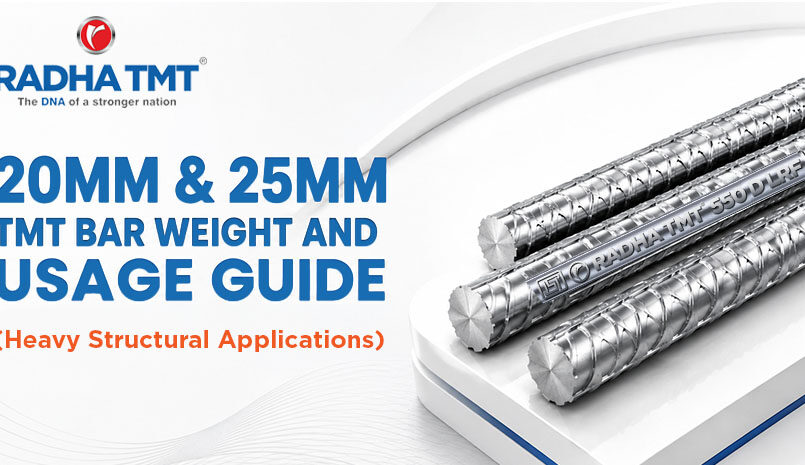


Steel Reinforcement Bars: A Technical Handbook to Sizes and Applications
Steel reinforcing bars or rebar form the core of concrete construction in the modern era. The application of the appropriate steel bar size is of prime concern to impart structural strength, load-bearing capacity, and durability to reinforced concrete structures. This article presents a general overview of various steel bar sizes available in the market and their corresponding uses in various projects.
Steel Bar Size and Class Standards
The diameter of steel bar of reinforcement bars complies with international standards, with the most widely used reference in terms of millimeters for the metric and inches for the imperial system. One must be aware of the steel bars sizes chart for optimum material choice and structural design calculations.
The below steel bar sizes chart shows the most common diameters used in building construction:
Metric Sizes (Steel Size in mm):
– 6mm – Minor reinforcement
– 8mm – Secondary reinforcement and stirrup
– 10mm – Light structural elements
– 12mm – Domestic building
– 16mm – Structural use, medium-duty
– 20mm – Heavy structural elements
– 25mm – Major structural elements
– 32mm – Heavy-duty infrastructure construction
– 40mm – Heavy construction of special type
Imperial Equivalents:
– 3 bar (9.5mm diameter)
– 4 bar (12.7mm diameter)
– 5 bar (15.9mm diameter)
– 6 bar (19.1mm diameter)
– 8 bar (25.4mm diameter)
– 10 bar (32.3mm diameter)
Application-Specific Steel Bar Selection
Residential Construction
In normal residential construction work, steel bar sizes ranging from 8mm to 16mm are generally applied. 12mm steel diameter is the size most advisable to be utilized for heavy reinforcement of residential slabs, beams, and columns to provide sufficient strength without being excessively costly.
Commercial and Industrial Structures
Industrial buildings and commercial units require larger steel bar sizes since they require more loads. The steel size in mm required for the same would typically range from 16mm to 32mm, and it will be particularly selected after load calculation and structure analysis.
Infrastructure Projects
Giant-sized structures like bridges, highways, and skyscrapers employ the entire spectrum of steel bar sizes. They are chosen by highly accurate structure analysis to decide the best steel diameter for each structural member.
Technical Considerations in Choosing Steel Bar
Load-Bearing Capacity
The relationship between steel bar sizes and capacity to bear is most prominent in the design of structures.
Larger diameters result in larger cross-sectional area and hence larger tensile capacity and bending moment resistance. Designers need to specify required steel area from applied load as well as safety factors.
Development Length Requirements
The steel diameter is directly related to required development length for effective load transfer between the steel and concrete. Proportionally longer development lengths are needed for larger bars to develop full strength utilization.
Spacing and Placement Considerations
The choice of proper steel bar sizes should take into account functional installation requirements, such as minimum space, concrete cover, and ease of construction. The steel size in mm selected should accommodate sufficient concrete flow and consolidation over the rebar.
Quality Standards and Material Properties
Grade Specifications
Steel bar quality is regulated by national and international standards in the shape of ASTM, BS, and IS codes. The codes define the yield strength, tensile strength, and elongation for various steel bar sizes.
Chemical Composition
Chemical composition of reinforcement steel reflects its strength properties and resistance to corrosion. Some alloy compositions are involved in modern steel bar production to improve the performance characteristics of all steel bar sizes.
Economic Considerations
Cost Optimization
steel bar sizes also play important roles to play in the project cost. Although larger diameters minimize the number of bars needed, they possess higher unit costs. The steel bar sizes chart should be scrutinized in conjunction with prevailing market prices to provide optimal cost-performance relations.
Availability and Lead Times
Various steel bar sizes are variously available in the local market. The steel size in mm to be chosen must take into account supply chain considerations, especially for specialty applications involving off-standard diameters.
Installation and Handling Practices
Transportation and Storage
Large steel bar sizes demand special equipment for handling and storage sheds. The steel diameter has an influence on transportation expense and on-site handling expense, which ultimately impinges on project logistics.
Cutting and Bending
The steel diameter in mm dictates cutting and bending equipment. Higher diameters have more robust equipment and may necessitate hot bending procedures for tighter radius specifications.
Future Trends in Steel Bar Technology
Advanced Steel Grades
Metallurgical developments are providing higher-strength steel grades where lower steel bar sizes can be achieved with identical structural performance. The new grades provide higher steel diameter efficiency and cost savings.
Corrosion-Resistant Coatings
Up-to-date steel bar technology employs a range of coating systems to improve corrosion resistance and thereby improve service life on all steel bar sizes. These advances are especially useful for structures in hostile environments.
Wise choice of steel bar sizes is critical to successful reinforced concrete construction. The alignment of the interaction between s Steel diameter, structural demands, and realities allows contractors and engineers to make rational decisions that optimize performance, economy, and constructability.
The complete steel bar sizes chart and usage regulations presented in this handbook are a basis for selecting materials for different construction works. With the ongoing evolution of technology, advancements in steel size in mm availabilities and material properties will continue to improve the ability of reinforced concrete construction.
Effective project results rely on close attention to each aspect of steel bar selection, from structural design to installation and final performance. Adherence to accepted practice and familiarity with industry developments enable construction professionals to produce the best result in their reinforced concrete work.