
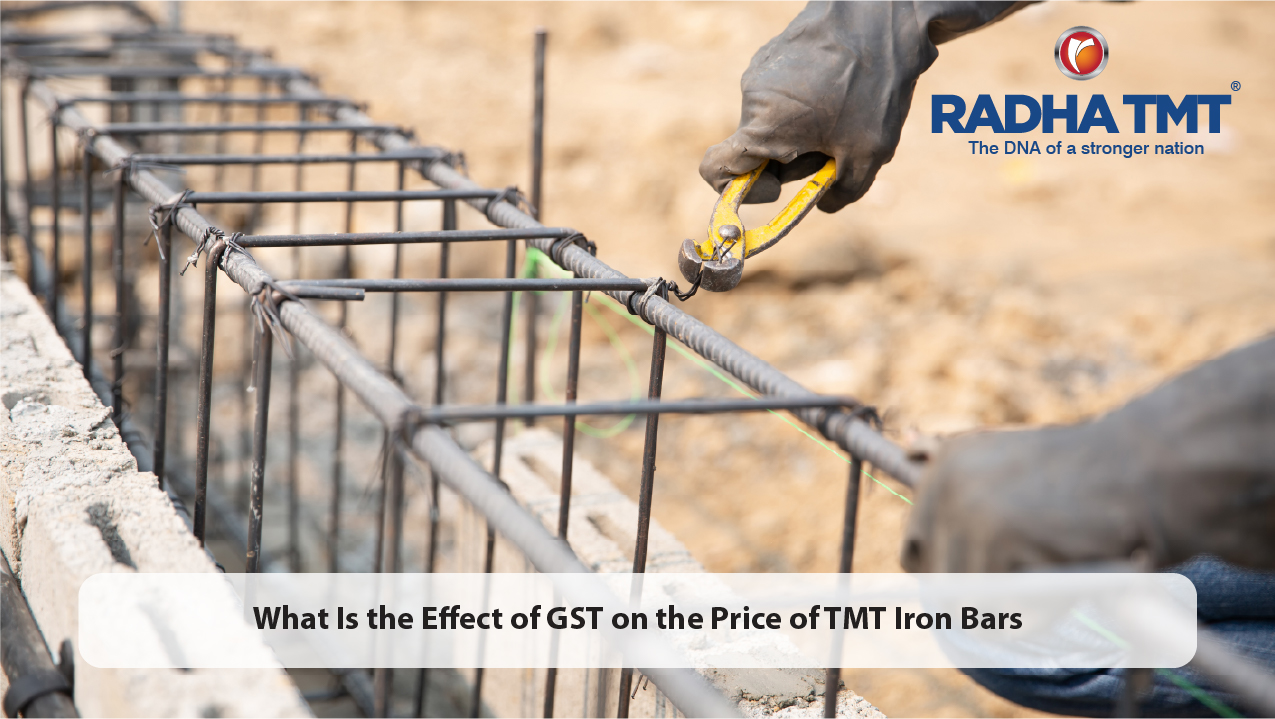
What Is the Effect of GST on the Price of TMT Iron Bars?
Walk past any building site in Hyderabad or Nagpur and the glint of steel is hard to miss. Those ribbed rods stacked beside piles of sand and cement are more than just metal; they’re what hold a structure together when the concrete sets. Among all grades of steel, TMT bars, short for Thermo-Mechanically Treated bars, have become the most trusted choice for builders.
A company like Radha TMT, based in South India, has turned this product into a symbol of strength and reliability. But behind every delivery truck full of steel lies a quiet number that shapes the market price, the Goods and Services Tax (GST). It’s a small abbreviation that makes a big difference to every contractor’s budget.
What Exactly Are TMT Bars?
TMT bars aren’t ordinary steel rods. They are made through a special heat-treatment process that gives them a hard outer surface and a softer inner core. The result is a bar that bends without breaking, holds its grip in concrete, and stands firm through earthquakes and temperature changes.
Radha TMT uses advanced rolling and quenching systems to maintain this balance. The company’s quality checks are known to be thorough, which is one reason builders from Telangana to Maharashtra prefer its steel. Every batch carries consistency, and that consistency has a cost, part of it from manufacturing, and part from taxation.
The GST Rate That Applies to TMT Bars
When the government rolled out the GST system in 2017, it replaced older taxes like excise duty and VAT. Under this structure, most iron and steel products, including TMT bars, fall under the 18 percent tax bracket.
For local sales within a state, that 18 percent is divided into 9 percent CGST and 9 percent SGST. For interstate supplies, IGST at 18 percent applies in one shot.
What it means on paper is simple. If the market rate for a 12 mm TMT bar is ₹ 70 per kg before tax, adding GST takes it to roughly ₹ 82.60 per kg. The numbers look small when you buy a few kilograms. They look very different when you buy several tonnes for a housing project.
How GST Changes the Final Price
The tax itself hasn’t changed in years, but steel prices do. When the base price rises, the tax amount rises too, because it’s a percentage, not a flat fee.
If steel costs ₹ 70 per kg today and moves to ₹ 75 next month, GST climbs from ₹ 12.6 to ₹ 13.5 per kg automatically. Multiply that by thousands of kilograms and the difference becomes serious. Builders who quote project costs months in advance often have to adjust their estimates because of this chain reaction.
For homeowners or small contractors who are not registered under GST, that 18 percent is part of the final cost they pay. For registered companies, the amount can be claimed back as Input Tax Credit (ITC), reducing their net burden. But to do that, paperwork must be exact, invoices must match GST numbers, and suppliers must be compliant. Radha TMT ensures these details are handled properly, which adds peace of mind to the deal.
Why the Rate Stays at 18 Percent
Economists and industry experts say the 18 percent slab strikes a middle ground. A lower rate might have boosted short-term sales, but it could also reduce government revenue from a major sector. A higher rate would make construction expensive across the board. Keeping it steady gives manufacturers and buyers a predictable base to plan around.
For Radha TMT, that consistency helps in publishing transparent price lists. Customers can see the base cost, add the tax, and know exactly what they’ll spend. It also keeps comparison fair: when all suppliers work under the same tax slab, the only difference left is quality and service.
Everyday Examples from the Market
Let’s take a real-world scenario.
A mid-sized residential project in Warangal needs ten tonnes of TMT bars. The local rate is ₹ 70 000 per tonne before tax. GST adds ₹ 12 600 to each tonne, so the total becomes ₹ 82 600. That single line of tax means an extra ₹ 1.26 lakh on the order.
For bigger infrastructure contracts, the numbers scale sharply. That is why large builders follow daily steel rate updates and often lock prices with suppliers like Radha TMT before placing bulk orders.
What Buyers Should Remember
Always check if GST is included in the quoted price. Some dealers show prices excluding tax to appear cheaper.
Plan the budget with the tax in mind. Adding 18 percent at the end can upset the entire cost sheet.
Prefer suppliers with clean documentation. Input Tax Credit works only when GST filings are proper.
Keep an eye on market rates. The GST percentage doesn’t change, but its impact grows when steel prices rise.
Why Transparency Matters
Radha TMT has long highlighted transparency as part of its brand philosophy. The company’s blog regularly lists steel prices for different diameters and clarifies whether they are inclusive or exclusive of GST. This small habit saves buyers confusion at the billing stage and builds long-term trust.
In an industry where price revisions happen weekly, a consistent tax explanation builds credibility. Radha TMT treats it as part of good service, just like maintaining BIS standards or timely deliveries.
The Bigger Picture
GST is not just a tax; it is also a signal of how formal the Indian construction supply chain has become. Before 2017, taxes varied by state, and comparing rates was difficult. Today, a bar made in Hyderabad can be sold in Pune or Bhubaneswar under the same tax rule. That uniformity has helped organized manufacturers like Radha TMT grow faster and compete fairly.
For the end consumer, it means simpler billing and fewer hidden costs. The structure is clearer, even if the number 18 percent feels heavy at first glance.
In Short
GST on TMT bars in India is 18 percent.
The rate is uniform across states and products.
The tax amount changes with the base steel price.
Registered buyers can claim credit; others pay it as part of cost.
Transparent brands such as Radha TMT make the process easier to understand.
Final Word
Taxes might seem like paperwork, but in construction they decide timelines, budgets and even trust. When the numbers are clear, projects move faster and disputes stay low. Radha TMT continues to focus on that clarity, strong steel, honest pricing, and complete transparency from mill to market.
Understanding the GST effect is not just an accounting exercise. It’s part of knowing what keeps a building strong, from the foundation up.